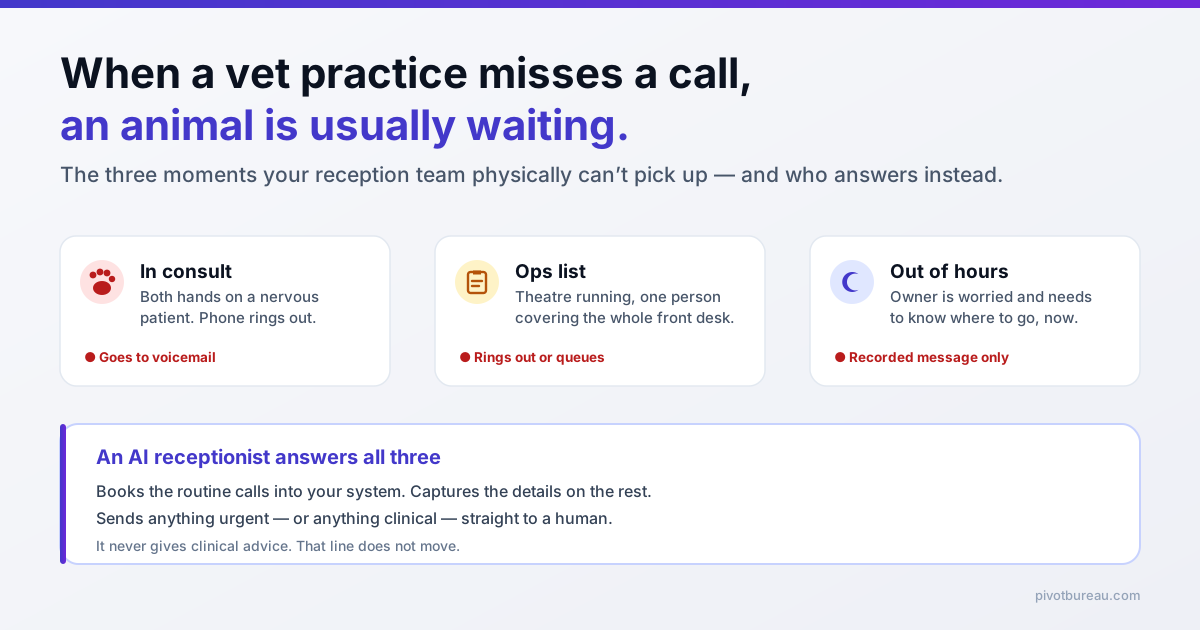
Veterinary reception is a harder job than dental or salon reception, and the reason is worth saying plainly: a meaningful share of your incoming calls are from people who are frightened. Not annoyed about a booking slot — frightened. Their dog has eaten something, their cat has stopped eating, the rabbit is breathing oddly. That changes what “missing a call” means. It isn’t a lost lead. It’s an owner sitting in a kitchen with a sick animal, listening to a recorded message.
So I want to be careful with this one. An AI receptionist has a real, useful role in a vet practice, but the boundaries matter far more here than in any other vertical I build for. Get them right and it takes genuine pressure off your nurses. Get them wrong and you have a machine making clinical noises at a worried owner, which is indefensible.
The three calls a vet practice can’t take
Watch where enquiries leak out of a small animal practice and it isn’t random. It’s the same three windows, every week.
- In consult. Both hands are on a patient that would rather be anywhere else. Nobody is getting to the phone, and if a nurse does, they’ve left the animal.
- The ops list. Theatre is running, one person is covering the entire front desk, and the phone is competing with the people physically standing there.
- Out of hours. Evenings and weekends, when an owner notices something is wrong and needs to know where to go — now, not at 9am.
Most callers don’t leave a voicemail. For a routine booking they ring the next practice. For something worrying they either ring an emergency provider or, worse, they sit and wait. Neither outcome is good for you, and the second one isn’t good for the animal.
The two things it must never do
This is the part I’d want to hear first if I ran a practice, so let’s do it before the benefits.
It must never attempt triage. Deciding whether “he’s eaten a bit of chocolate” is urgent is a clinical judgement involving species, weight, quantity and timing. An AI receptionist has no business anywhere near it. The correct behaviour when a call sounds even slightly urgent is to stop, stop asking questions, and get a human on immediately.
It must never give clinical advice. Not dosage, not “that’s probably fine”, not “try this overnight”. Nothing. If a caller asks, the agent should say plainly that it can’t advise and put them through. A bot that hedges helpfully is more dangerous than one that refuses cleanly.
Where this meets your RCVS obligations
There’s a specific reason out-of-hours matters more for vets than for most businesses. Under the RCVS Code of Professional Conduct, veterinary surgeons in practice must take steps to provide 24-hour emergency first aid and pain relief to animals. The supporting guidance on 24-hour emergency cover also expects you to give clients full details of your emergency arrangements.
An AI receptionist doesn’t satisfy that obligation and nobody should sell it to you as if it does. What it does is make the communication side of it reliable. Your out-of-hours arrangement is currently explained by a recorded message that people talk over, mishear, or hang up on. An agent that picks up on the first ring, says the same clear thing every time, and connects the caller to the right place is a better delivery mechanism for information you are already required to give.
That’s a modest claim, deliberately. It’s also the most useful thing an AI can do in a vet practice at night.
Chat, voice, or both?
Two front doors, and they behave — and cost — very differently. Most practices should start with one.
| Website AI chat | AI voice receptionist | Answerphone | |
|---|---|---|---|
| Covers | Owners researching you online, any hour | Phone calls reception can’t reach | Nothing — it records |
| Registration enquiries | Handles well | Handles well | Usually lost |
| Urgent calls | Poor fit — wrong channel | Routes to a human immediately | No routing at all |
| Running cost | Flat monthly fee | Per answered minute — real metered cost | Near zero, loses most callers |
| Start here if | You get website traffic but few calls | Your phone rings out of hours | — |
Chat is text in, text out — fractions of a penny a message. Voice pays for a live line, real-time transcription, the model and a natural voice for every second of every call. I broke that stack down in what an AI phone receptionist costs per minute. It’s why any honest voice plan has an included bucket of minutes and a hard spend cap instead of an “unlimited” promise.
For most vet practices I’d argue voice is the one that matters, which is unusual — for a salon or a trade I’d normally say start with chat. The difference is that a worried owner at 9pm picks up the phone. They don’t open a chat widget.
Drawing the data line
An owner’s name, number and the fact they contacted a vet is personal data, and you are the controller for it. That doesn’t rule an AI receptionist out — plenty of practice tools process client contact data — but a few things need settling first.
- A written data processing agreement naming the provider as your processor. The ICO’s guidance on controllers and processors sets out what that relationship has to cover.
- Data minimisation. The agent collects what it needs to book or pass a message. Nothing else.
- Know where the data lives. Which sub-processors, which country, kept how long. Ask plainly.
If a provider goes vague when you ask where client data is stored, that’s your answer.
What it’s actually worth
The sum is simpler than most vendors make it. Ask your phone system for two numbers over a month: calls that went unanswered, and calls that arrived outside opening hours. That’s your leak. Then weigh it against what a registered client is worth to a practice over the years they stay with you — not the value of one consult.
You can sketch your own version with our free AI chatbot cost calculator, using your numbers rather than mine. Current plans and what’s included sit on the pricing page, and I’d rather you read them there than take a figure from a blog post that might drift out of date.
Now the honest part. I have not yet run this for a paying veterinary practice, so nothing here is a client case study and I’m not going to dress it up as one. What I can tell you is that the underlying agent is the one I built and tuned for Pivot Bureau, which you can hear answer in the browser, and that the routing logic above is the same pattern I use everywhere the stakes are high enough to demand a clean handover. The mechanics are real. The veterinary numbers are yours to measure, and I’d want to measure them with you rather than promise them.
You’re not buying a replacement for your reception team. You’re buying the certainty that nobody rings your practice at 9pm and hears nothing useful.
A sensible rollout order
- Measure the leak. Missed and out-of-hours call counts for one month. That number is the business case, and it’s usually bigger than people expect.
- Write the escalation rules before the greeting. What counts as urgent, who it goes to, what happens if they don’t answer. This is the whole build in a vet setting.
- Script the out-of-hours message with your actual arrangements, so what the agent says matches what you’re obliged to tell clients.
- Get the DPA in writing and confirm where data is stored before a single live call.
- Decide booking depth. Direct into your practice management system, or captured for the team to complete. Both are fine.
- Review a month of transcripts. Real calls show you what to tighten. This is where a scripted bot stops improving and a properly run agent keeps getting better — the distinction I unpack in AI receptionist vs agentic AI.
If you run a practice and want to sanity-check whether this is worth your time, the AI receptionist page has a voice demo you can listen to, and the dental version of this article covers the same ground for a clinic setting. For the wider picture there’s how to use AI for small businesses in the UK.