Every dental practice already has a receptionist problem, whether or not it feels like one. It isn’t that the people are bad — it’s that the job is physically impossible to do without gaps. One or two people cannot greet the patient in front of them, settle a running-late appointment, take a payment, and answer a phone that rings while all of that is happening. Something gives, and the thing that gives is almost always the call — because the caller is invisible and the person at the desk is not.
An AI receptionist is not a magic front desk. It’s a way to cover the specific, predictable moments when your human team simply cannot pick up. That’s the whole pitch, and it’s worth being precise about it rather than overselling, so let’s do that.
The three calls a dental front desk always misses
When you watch where dental enquiries actually leak away, it’s not random. It’s three repeating windows in every single day.
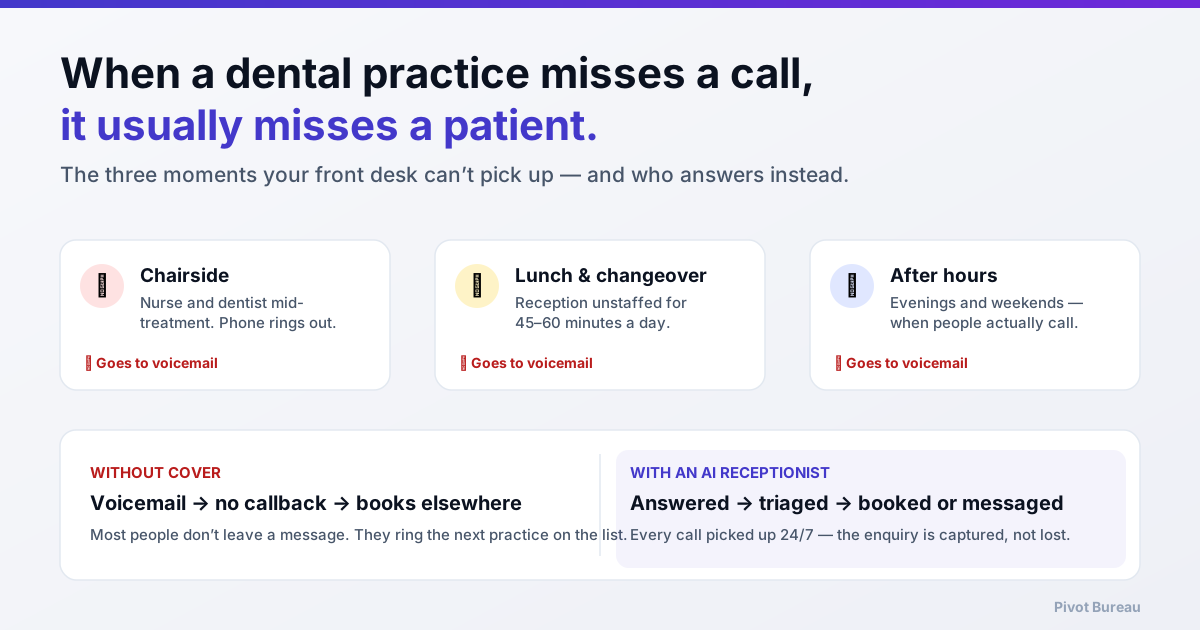
- Chairside. Your receptionist is with a patient — checking someone in, taking a card payment, calming a nervous kid. The phone rings and there is genuinely no free hand.
- Lunch and changeover. Most practices have a daily window — often 45 to 60 minutes — where reception is thin or unstaffed. Calls in that window frequently hit voicemail.
- After hours. Evenings and weekends are when working people finally get a minute to sort their teeth out. The practice is shut; the call is gone.
The uncomfortable part is what happens next. Most people do not leave a voicemail, especially for a first enquiry. They ring the next practice on the Google results, and if that one answers, that’s where they book. The call you missed didn’t wait for you — it converted for someone else. This is the same dynamic we covered for the trades in AI appointment setters for small business: the enquiry you don’t answer is the one your competitor does.
What an AI receptionist actually does — and doesn’t
Here’s where honesty matters, because dentistry is regulated and clinical, and an over-promising vendor is a liability. An AI receptionist for a dental practice is a front-of-house agent, not a clinician. Drawing the line clearly is what makes it safe to use.
What it does well: greet the caller in your practice’s name, answer the routine questions that eat reception time (opening hours, location and parking, whether you’re taking new NHS or private patients, rough guidance on how booking works), take a new-patient enquiry, capture the caller’s name and number, book or request an appointment, and take a clear message for anything it shouldn’t handle itself. It does all of this in a natural voice, 24/7, without ever being “on another call”. If you want to hear one answer in the browser, there’s a live voice demo on our AI receptionist page.
What it must not do: give clinical or dental advice, triage a genuine emergency itself, diagnose, or discuss treatment specifics. The correct behaviour for anything clinical or urgent is to recognise it, stop, and route it to a human — or to your existing out-of-hours and emergency guidance. A well-designed agent is built to defer, not to guess. This is the same distinction between a scripted bot and a genuinely capable agent that we unpack in AI receptionist vs agentic AI.
Chat, voice, or both?
There are two front doors an AI receptionist can cover, and they behave — and cost — very differently. Website chat handles the patient researching you online; a voice agent handles the phone. Most practices start with one and add the other when the numbers justify it.
| Website AI chat | AI voice receptionist | Traditional voicemail | |
|---|---|---|---|
| Covers | People on your website, day or night | Phone calls when reception can’t pick up | Nothing — it just records |
| Captures the enquiry? | Yes, into a lead/message | Yes, books or takes a message | Only if they bother to speak |
| Running cost | Low — usually a flat monthly fee | Per-minute (real, metered cost) | Effectively free, but loses most callers |
| Best first step for | Practices with website traffic but few calls | Practices whose phone rings out of hours | — |
Why the cost difference? Chat is text in, text out — fractions of a penny per message. Voice pays for a live phone line, real-time transcription, the language model and a natural voice, every second it’s on a call. We broke the full stack down in what an AI phone receptionist costs per minute, and it’s the reason honest voice plans include a bucket of minutes and a hard spend cap rather than pretending “unlimited” is free.
The bit vendors skip: patient data
A caller’s name, number and the fact they’re contacting a dental practice is personal data, and you are the data controller for it. That doesn’t make an AI receptionist off-limits — plenty of routine practice tools process patient contact data — but it does mean a few things are non-negotiable before you switch one on:
- A data processing agreement (DPA) with the provider, in writing, naming them as your processor. The UK regulator, the Information Commissioner’s Office, sets out what that has to cover.
- Data minimisation. The agent should collect only what it needs to book or pass a message — not coax clinical history out of people over the phone.
- Know where the data lives and how long it’s kept. Ask the provider plainly: which sub-processors, in which country, retained for how long.
- Fit with your existing duties. Practices already work to General Dental Council standards on confidentiality; your AI front desk has to sit inside those, not around them.
If a provider gets vague when you ask where patient data is stored, that’s your answer. A serious partner will have the DPA ready and will happily talk you through it.
What it’s worth — the only sum that matters
Dental economics make this calculation unusually clear, because a single new patient is not a one-off. A new-patient exam leads to a hygiene visit, often to treatment, and — if you look after them — to years of routine appointments and referrals. The lifetime value of one recovered new patient dwarfs the monthly cost of answering the phone.
So the honest test isn’t “how much does the AI cost?” It’s “how many new-patient enquiries are we currently sending to voicemail, and what is even one of them worth over the next few years?” If covering your three daily gaps recovers a single new patient a month who would otherwise have booked elsewhere, the maths is not close. You can sketch your own version of this with our free AI chatbot cost calculator, using your real numbers rather than ours.
To be straight with you — and our blog holds us to not inventing results — we haven’t yet run this for a paying dental practice, so this isn’t a case study with a headline percentage. What it is, is the same voice agent we built and tuned for Pivot Bureau, applied to a setting where the “missed call = missed patient” logic is about as clean as it gets. The mechanics are proven; the dental-specific ROI is yours to measure.
You’re not really buying an AI receptionist. You’re buying back the new patients who currently ring the next practice on the list the moment yours goes to voicemail.
How to actually roll it out (a sensible order)
- Measure the leak first. Ask your phone system or provider for missed and after-hours call counts over a month. That number is your business case.
- Start with the cheapest gap to close. If you have website traffic, an AI chat receptionist is the low-cost first step; if your phone rings out of hours, start with voice.
- Script the boundaries before the greeting. Decide exactly what the agent handles and what it escalates — anything clinical or urgent goes to a human, every time.
- Get the DPA in writing and confirm where patient data is stored before it takes a single live call.
- Book against your real system. Decide whether the agent books directly into your practice software or captures the enquiry for your team to complete — both are fine, they just change how much of the last step is automated.
- Review a month of transcripts. Real calls will show you the questions to add and the edge cases to tighten. This is where a scripted bot stops improving and a well-run agent keeps getting better.
How Pivot Bureau approaches it
We build done-for-you AI receptionists for UK small businesses — chat first, voice when the call volume earns it — with the boundaries, the spend cap and the data handling built in rather than bolted on. For a dental practice that means an agent that sounds like your practice, captures the enquiries you’re currently losing, and knows exactly when to hand a caller to a human. If you want to see it in action, hear the voice demo, compare the receptionist plans, or read the wider picture in how to use AI for small businesses in the UK.