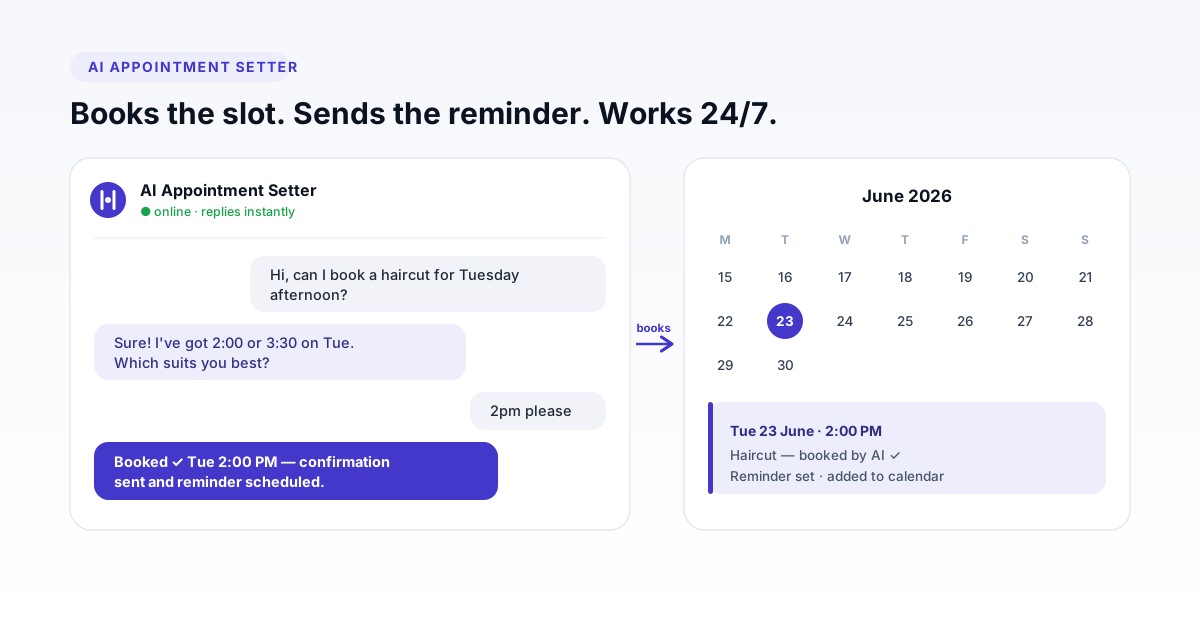
A booking link waits for people to click. An AI appointment setter goes and gets the booking — chatting with the lead, answering the question that's holding them up, checking your live calendar and putting the appointment in itself. It's the difference between a form and a front-desk that never sleeps. Here's how it works for a small business, and where it fits.
What an AI appointment setter actually does
An AI appointment setter is a chat assistant with one job: turn an enquiry into a confirmed booking, on its own. Drop someone into a conversation with it and it will, in a single thread:
- Engage the lead in plain language — on your website, WhatsApp or Instagram
- Qualify what they need — service, rough timing, any details you care about
- Check your live availability and offer real times that are actually free
- Book the slot straight into your calendar or booking system
- Confirm and remind — send the confirmation, then a reminder before the day
That last part is the bit that matters. A normal chatbot describes — "we're usually open Tuesdays." An appointment setter acts — it reads the diary and writes the booking back. That's why it's a piece of agentic AI, not just a smarter FAQ.
Why a booking link isn't the same thing
Most small businesses already have a booking link — Calendly, Acuity, a "Book now" button. They're useful, but they leak. A link only works if the customer:
- clicks it instead of just messaging you,
- understands your grid of times without help, and
- doesn't have a question first ("do you do kids' cuts?", "can you come to me?").
Real people stall at all three. They message "are you free Saturday?" and then go quiet when nobody replies for an hour. The appointment setter catches exactly those people — it answers the question and completes the booking in the same breath, while their intent is still hot. It doesn't replace your booking link; it rescues the leads who would never have used it.
How it works, step by step
Under the friendly chat window, the flow is simple and repeatable:
- A message comes in — from your site chat, WhatsApp, Instagram or Messenger.
- The AI understands intent — "book a haircut Tuesday afternoon" — and asks only what it still needs.
- It checks your real calendar for free slots that match.
- It offers genuine options — "2:00 or 3:30 on Tuesday?" — never a time you can't honour.
- It writes the booking back into your calendar and CRM, the same as a manual entry.
- It confirms and schedules a reminder, and hands off to you if anything is out of scope.
Steps 3 and 5 are where the "agentic" magic lives — the AI is using your tools, not guessing. If you want the deeper distinction between an assistant that answers and one that takes action, we cover it in AI receptionist vs agentic AI.
Appointment setter vs booking link vs a person
| Booking link | AI appointment setter | A person on the phone | |
|---|---|---|---|
| Answers questions first | No | Yes | Yes |
| Works at 11pm & weekends | Yes | Yes | No |
| Handles WhatsApp & Instagram | No | Yes | Rarely |
| Checks live availability | Yes | Yes | Yes |
| Chases no-shows with reminders | Sometimes | Yes | If they remember |
| Cost per booking | Low | Low | High (your time) |
| Converts the unsure | Poor | Good | Best |
Where it lives
The strongest setup runs the same appointment setter across every channel a customer might message: your website chat, WhatsApp, Instagram and Facebook Messenger. Most missed bookings happen out of hours, on the channels your phone line doesn't cover — so meeting people where they already are is half the win. For an estate agent that's the Sunday-evening viewing request; we cover that side in AI tools for estate agents.
What it needs to connect to
To book rather than just chat, it plugs into the tools you already use:
- Your calendar or booking system — to read availability and write the appointment
- Your CRM or a simple sheet — to log the lead and the booking
- Email or SMS — to send the confirmation and reminder
If you've not got a tidy calendar yet, that's fine — we'll set a sensible one up as part of the build. The point is that the AI works with your real systems, the same idea behind any AI agent for a small business.
What about no-shows?
No-shows quietly cost more than missed enquiries, because you've already turned other work away to hold the slot. Because the appointment setter owns the booking, it also owns the follow-up: an automatic reminder the day before, and a simple "reply to rebook" if someone can't make it. You recover the slot instead of staring at an empty diary.
Is this a receptionist or an agent?
It's the agentic end of the spectrum. An AI receptionist is brilliant at answering and capturing — and for many businesses that's the right, cheapest first step. The appointment setter is what you reach for when answering isn't enough and you want the booking done. Plenty of clients start with a receptionist and switch booking on later, once it's clearly worth it.
Rule of thumb: if your problem is "enquiries go unanswered," start with a receptionist. If it's "people ask to book and then drift away," you want an appointment setter.
What it costs
For a typical UK small business, an AI appointment setter sits in the same bracket as an AI receptionist: a one-off setup fee plus a modest monthly cost to keep it live — not a charge per call or per booking. We break the numbers down in what an AI receptionist costs in the UK, and the live figures are on our pricing page. Because it recovers bookings you currently lose to slow replies, it usually pays for itself from a few saved appointments a month.
How we'd set it up
At Pivot Bureau we build the appointment setter custom-trained on your services, prices and rules — then connect it to your calendar so it books for real, across website, WhatsApp and Instagram. We start with the smallest version that fixes the leak in front of you, prove it's earning its keep, then add the cleverer steps only where there's an obvious return. No jargon, no over-engineering.
Want to see whether it fits your business? Have a quick chat with us, or grab a free audit first — no pressure either way.
FAQs
What is an AI appointment setter?
A chat-based assistant that talks to your leads, checks your live availability and books the appointment for them — then confirms it and sets a reminder. It takes the action of placing the booking, rather than only answering questions.
How is it different from a booking link like Calendly?
A booking link is passive and only works if the customer self-serves. An appointment setter is active — it holds a conversation, answers the question that's stopping them, and completes the booking inside the chat, capturing people who'd otherwise drop off.
Can it book straight into my calendar?
Yes. Connected to your calendar, it reads your real availability before offering a time, then writes the confirmed appointment back so it appears like any other booking.
Does it work on WhatsApp and Instagram?
Yes — the same setter runs on your website chat, WhatsApp, Instagram and Messenger, so it books leads wherever they message you, including out of hours.
How much does it cost for a small business?
Usually a one-off setup fee plus a low monthly cost, similar to an AI receptionist, rather than a per-booking charge. It tends to pay for itself from a handful of recovered appointments a month.